Design Process
Interfaces with the project.
Architecture, Design & Creative Process School
We help you master a structured, cutting-edge design process that is effective, powerful and designed to consistently produce stronger results.
Architecture and Design Mini Studios and 1:1 Coaching, powered by the Spatial Thinking Framework and led by Ken Chan — architect, design team leader, and creator of every architecture project on this page.
Online · Weekly sessions · International students welcome
“Spatial Thinking has taught me more about architecture than three years of architecture school.”
For architecture students
Learn how to produce portfolio-level design work.
The problem
You only get a few studios during your degree. Each one should help you grow as a designer and produce work you're proud of — not waste months on confusion.
Spatial Thinking was created to fix this problem.
Tutors say “trust the process” but never explain it.
Feedback is vague and unhelpful.
Weeks of work can lead to weak design outcomes.
Students burn out trying to figure things out alone.
Spatial Thinking transforms your Architecture Studio into a career-shaping experience—producing portfolio-ready work, sharpening your design process and turning frustration into tangible results.
I teach effective teamwork and leadership that translates into the profession. Stop getting frustrated with groupwork and learn better teamwork.
Studio should be a place to explore your ideas, push boundaries and develop effective design processes that lead to strong professional outcomes.
I genuinely love Architecture Studio. It remains one of the most formative experiences of my life—the processes I explored continue to shape my work even after 15 years.
For all the great things that universal tertiary education offers, they're also bloated, bureaucratic businesses who are slow to change, disconnected from industry and more invested in making money from research grants and international students than to ensure the success of their students. Sad I know. I was enraged when I first realised this.
I teach my students to, “Bring your own agenda.” Don't rely just on the university to ensure your success. Get your own help or find out more than what they offer. It doesn't have to be Spatial Thinking, but we are a strong start.
We're starting with students because it's far easier to oil a young engine, than an old one that has too much to unlearn.
We fast track your design learning and show you the right design process, not the Mickey Mouse activities the university has you complete.
Spatial Thinking Framework
A design and creativity framework focused on consistently producing stronger, more innovative outcomes. It shows you, step by step, how to understand your design process and become a strong designer.
Interfaces with the project.
Interfaces with you.
Interfaces with the world.
Carries the knowledge and ideas you bring into the work.
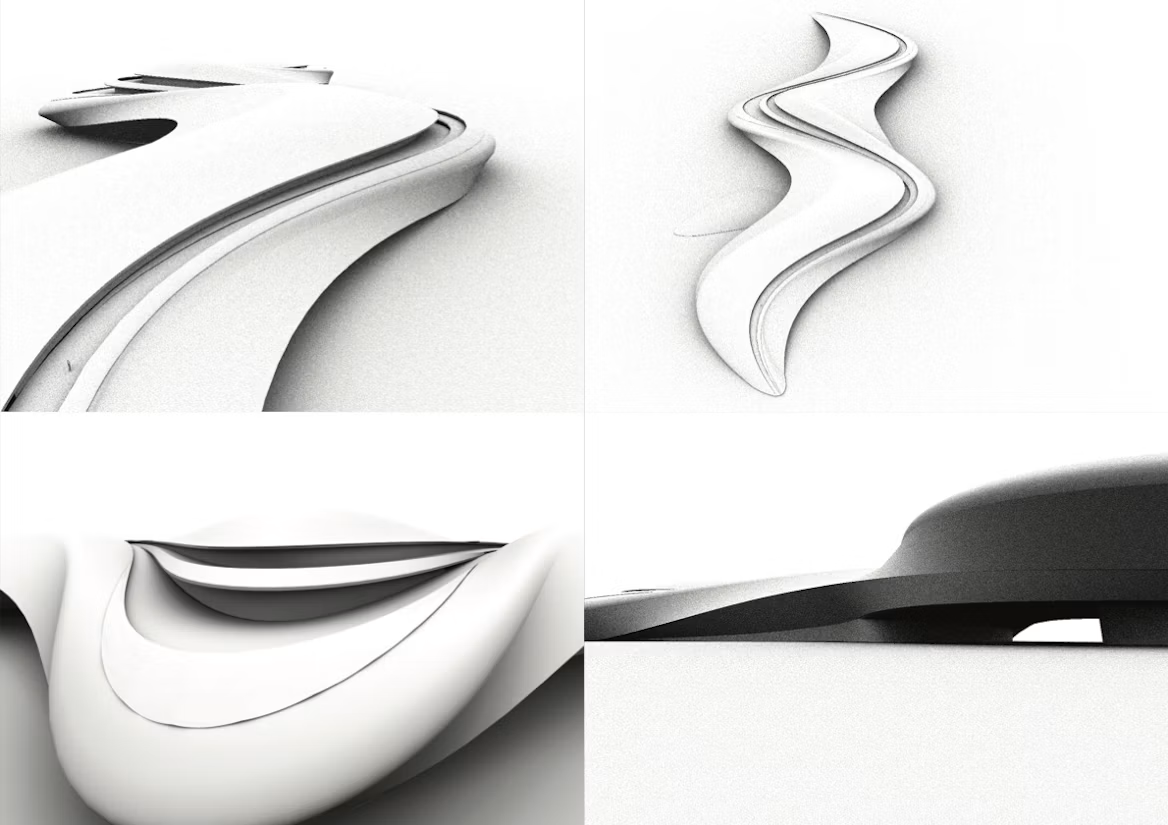
The Design Process
These form the Design Process — one of four Core Processes within Spatial Thinking.
Student-minded, affordable plans
Don't wait for semesters to start and end. Bring a university studio, a professional project or a personal one, and get feedback personalised to your goals.
Continuous design studio
$55/ month
Dedicated 1:1 support
Bring the project you are working on now — a studio project, a concept, a drawing, a crit or a portfolio.
Online only · 60-minute 1:1 sessions · International students welcome
See details ↗Dedicated 1:1 support
Coaching for any creative, designer or architect. Support for Personal Process, creative direction, identity, decision-making and the questions shaping what you want to make, change or move toward.
60-minute 1:1 sessions · Creative development and direction
See details ↗
Taught by
Hi, I'm Ken! I've done a heap of things, designed lots, taught hundreds of students with rave reviews. Now I'm excited to push the boundaries on creativity and design!
This platform was born from the successes of my students who benefited from my teaching.
Design process isn’t limited to design — innovation begins with the smallest actions, everyday.
It’s been an incredible journey building my iOS and Mac app, Inclr:
As an architect, I’ve led design teams to win projects in half the expected time, personally designed every project while managing complex deliverables, and inspired clients with cutting-edge designs that won large scale projects.
As a teacher and Academic Coordinator, I’ve found incredible success in education — inspiring countless students, transforming lives, and consistently fast-tracking their early careers and depth of knowledge.
The call for innovation exists in every pursuit — and I’ve used the same design process to drive success across architecture, technology, business, and education over the last 20 years.
The Spatial Thinking Framework was born from my students’ successes and from a clear, urgent need to define creativity itself — at a time when educational institutions continue to fail to prepare young minds, and the world moves faster than the delivery of knowledge.
With this mission, whatever we need to learn must happen now — and it starts with the smallest innovations, practiced continuously, week by week, here at Spatial Thinking, every day.
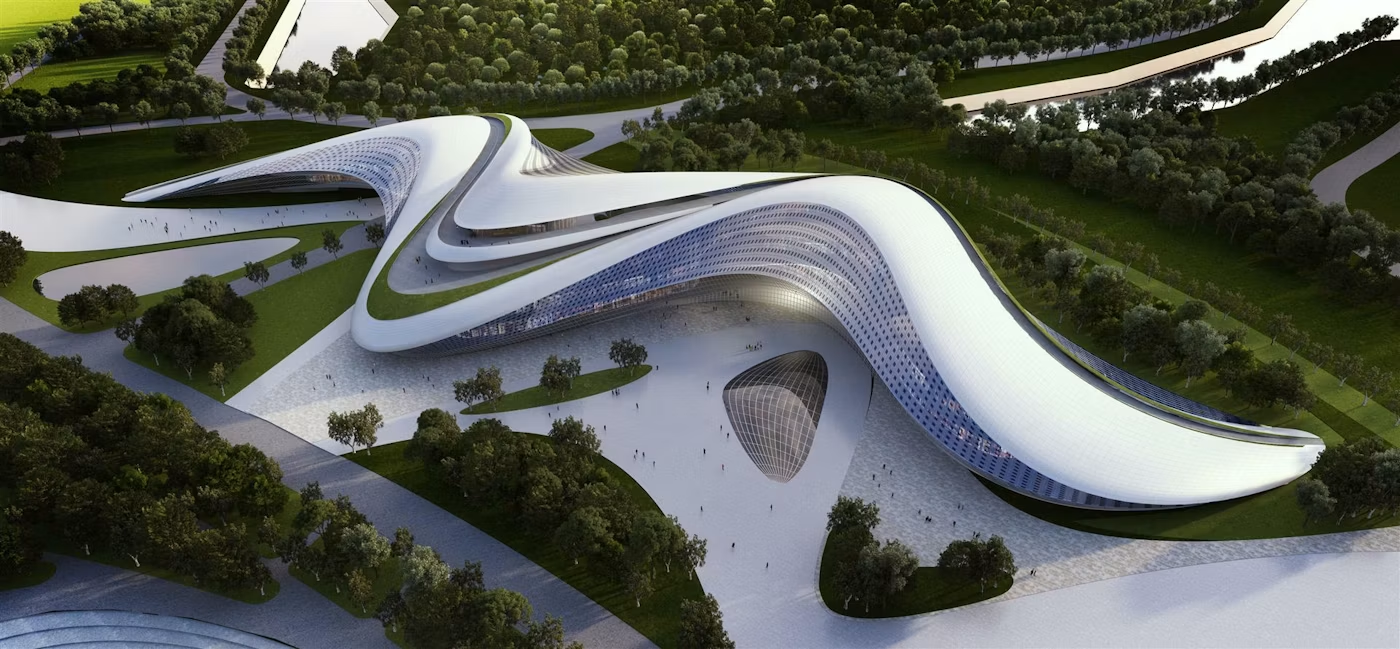
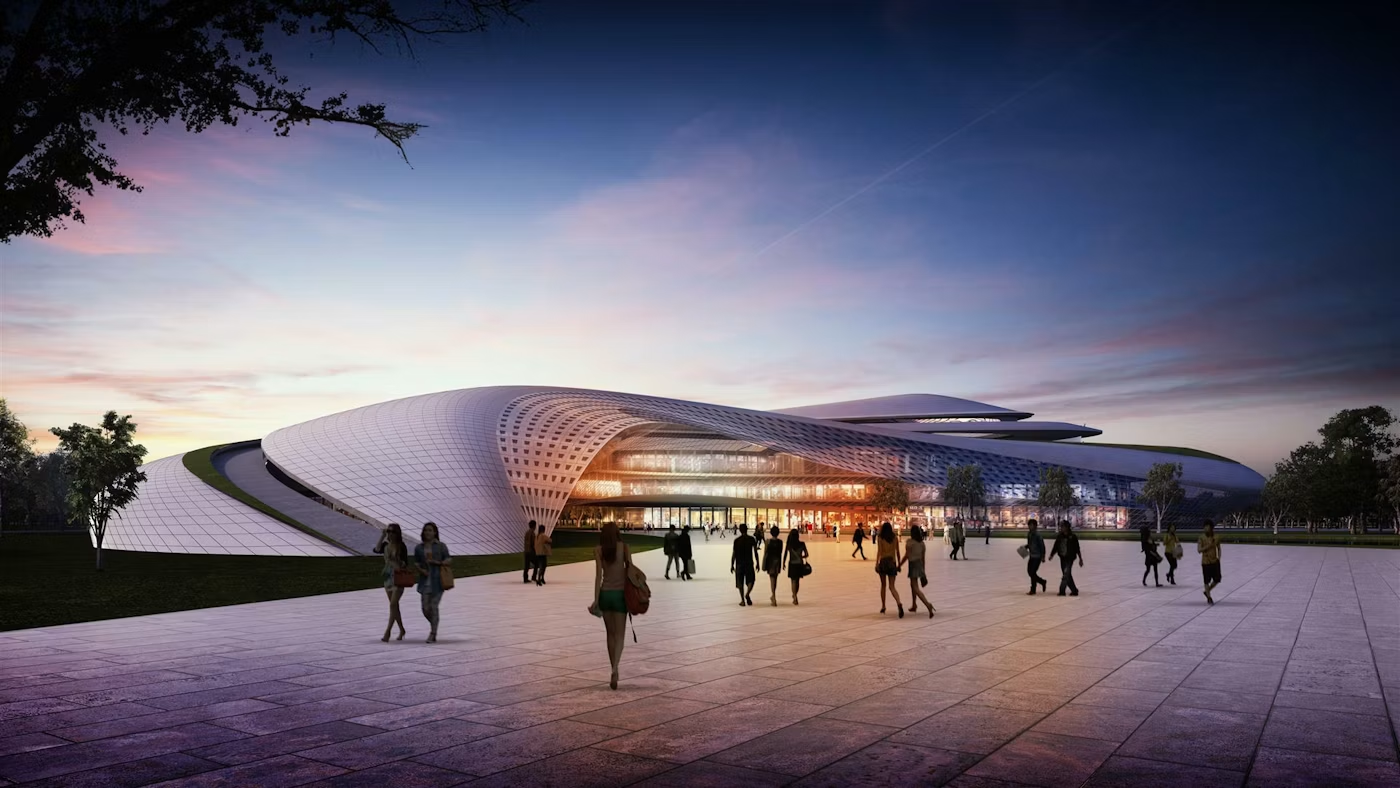
See Inclr ↗Every image on this page is designed by me. I designed, sketched and 3D modelled each design, led and managed each project team, under ridiculously tight deadlines. When you ask me if I know design, then I hope this answers that question.
What you don't see in these images is how long it took to design each project. The first image on this page, the wavy design, that's a shopping mall. It took 1.5 hours to design. Yep, it was quick. Another beautiful white tower below, that looks like a handbag fabric, that took 3 days.
The speed and the quality of my work is not the only thing I can sell though. I completed a competition in half the time and won the project, when another team took 3 times the time, and lost.
I lead and manage teams and have answered the question in each project, "Can I innovate this time? Can I do something new? With this team under this timeframe?" It takes a whole other skillset and mindset to be able to achieve guaranteed innovation, something I know very few design team leaders possess.
Finally the one skill that I possess is the ability to teach complex processes, and an undying passion to help young designers. Don't ask me why... I'm not sure.
I've designed 100s of buildings at all scales. These images only capture a selection of projects that I like and love, and were all personally designed by me.
Read the review section below and you will find in my 3 years of teaching, hundreds or so rave reviews from my students of my teaching. I never asked for this, and never planned for it. But it seems I'm a pretty amazing teacher.
The experience has taught me that I love helping students towards fulfilling their potential. I see potential in a student as if it's a real solid thing. And I see every single small piece of feedback as having the potential for major shifts and change. I love scale, and so every tiny ripple can change realities, and I seek these out relentlessly, especially in my teaching.
I do it via another superpower, I try to read people. It's a skill I've trained ever since I was young. It's powerful because sometimes, or many times, I'm deadly accurate with where a student is, what they need and where they can go.
There isn't one way to teach, and each student has different needs and conditions. The onus is on the teacher to be able to drive that progress and process, but most teachers can't, don't care, or arrogantly think they are doing it already, but aren't.
Most teachers aren't real designers. And even if they are, they might not have stepped outside of the field, nor led a team, or know how to teach. I'm all of those and I find myself incredibly humbled to be in this position and able to help teach.
Lastly, students are like anyone else, people... friends. I don't treat them as a lesser entity, like most teachers do. I actually treat my peers as lesser, because most of them aren't at a level I expect them to be, at least in terms of design process. It drives me up the wall when I hear about irresponsible teaching behaviours but sadly, it seems to persist everywhere! This is why Spatial Thinking does not align to any university institution.
Read Student Stories & Reviews ↗Spatial Thinking was created from the success of my students. Whatever I was teaching them, seemed to work consistently over many semesters and classes. I never intended to make a design and creativity framework, nor did I ever think this was a "thing." But after seeing consistently powerful outcomes, and getting rave reviews from students, it became clear that the current educational institutes aren't providing what helps students succeed and whatever I was doing helped better.
I'd spoken to the heads of schools and various professors. No-one cares. What they worry about is accreditation, research grants and their jobs.
The process of creating the Spatial Thinking Framework was rather quick. I've been building this process over decades, even during my university degree. Most of what's in here was my own discoveries, not taught by anyone. Incredible that even to this day, I question just how many years have I spent wondering the same thing, "Why don't they see the way I see it?"
It turns out that design and creativity in general is taught and considered too loosely. And the way I saw it was like a science. This is what Spatial Thinking Framework inherently is about — guaranteed strong design process and innovative results. And it was invented without ever thinking it was anything.

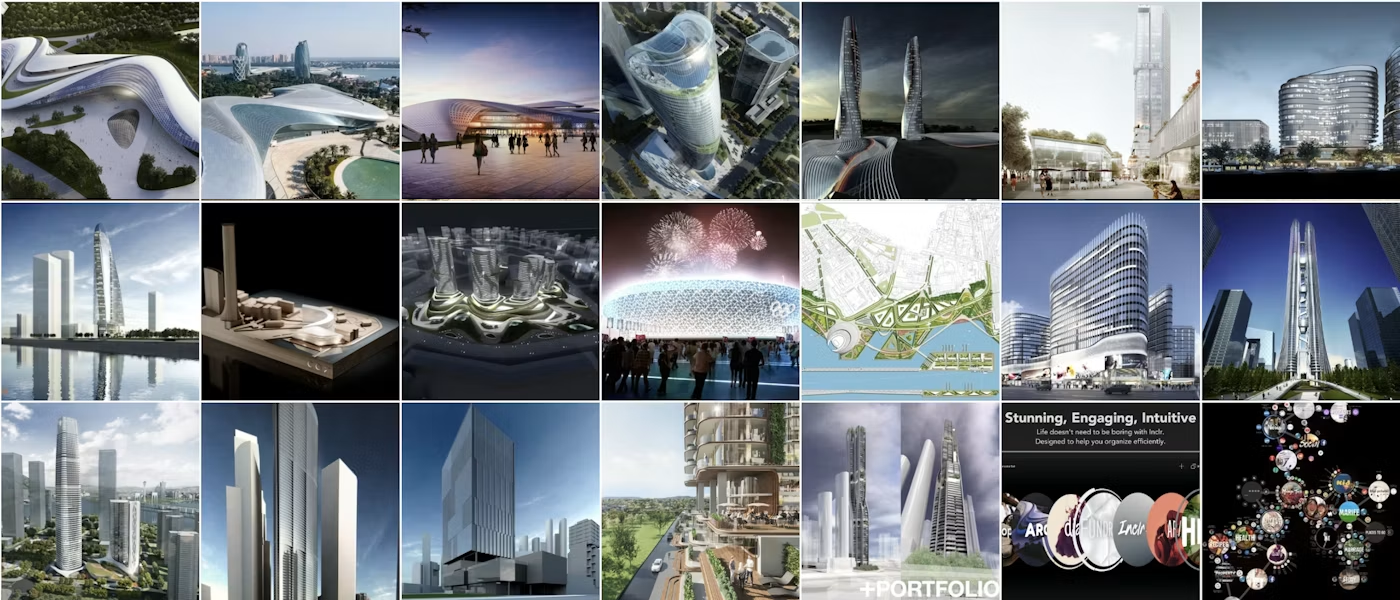
Selected architecture work · Ken Chan
Real results from real students
2nd-year Bachelor students
They took an ordinary student housing brief and pushed it well past what was asked, ending with an original proposal at Master’s level. They did it while their own tutor worked against them.
1st-year Diploma students
In their first ever design projects, they produced pavilions that were original, well resolved and at the level of 3rd-year Bachelor work. The projects went on to win awards.
1st-year Bachelor student
He turned a basic floor-plan exercise into considered, portfolio-ready plans. Those plans helped him land an internship.
2nd-year student
He broke through his creative limits, found his own design process and lifted his grades. He’s now taking on a Spatial Thinking Project to keep building that process.
Final-year students · 1:1 Coaching
Coaching showed them how much core design knowledge their degree had skipped. Together we built the clear, repeatable process for architecture they’d been missing.
Student
Spatial Thinking showed her what creative work can mean, and it gave her life more depth, meaning and purpose.
Some students nearly quit architecture because their studios and tutors were that bad. Design education has become a bit of a joke. Don't let its failures become yours.
In their own words
“It understates the deeper effects it will have on the user.”
“‘Spatial Thinking a better way to structure creativity and define a design process.’ From my experience, this is a very true description of what will happen directly when following the process, however, it understates the deeper effects it will have on the user.
Before using Spatial Thinking my original understanding and approach to design was very straightforward and linear because it had to be. Still, it lacked a deeper core to anchor everything down. This was very apparent while studying in college and onto my first year in university, leading to many approaches having a good concept but lacking the grounding to anchor them down.
Having read the Spatial Thinking Framework and started the Design Process, while doing two periods of Mini studio I have a clearer understanding of design. The concept I produced during my second period was more purposeful in its functions for the brief but also had a stronger design core.
This result speaks to a stronger design but also a greater internal strength. Others in the Mini Studio session have described me as having built greater confidence and overcome a challenge.”
“Design, wakes me up.”
“I've never felt this much of ownership in my life to be honest. I think mainly it's coming from the relationship I have with design... Design, wakes me up. I can talk so much longer about ideas. I love the moment delivering my intention. Pieces coming together is beautiful. I've learned this relationship not from architecture school but from Spatial Thinking.”
“Imagination is not limited to our minds alone.”
“Spatial Thinking has shown me that a process cannot be detached from personal experience; instead, it must be woven into everyday life. To keep the two apart leaves the ideas born from daily encounters untouched and undefined. It dismisses the quiet inspiration reality constantly offers and overlooks the hidden power present in the familiar and mundane. In the simple act of observation, we uncover that imagination is not limited to our minds alone, but can be molded and shaped by the world around us.
Yet, simple as this may seem, it is a deeply complex process. It requires separating your own thoughts and biases from what an object, a moment, or a thing is trying to say. To force an idea into being is to impose, often reducing its essence to something fragile and unproven. But when we allow reality to present itself, and when we truly observe, it has the power to evolve into fiction that embodies its own narrative and meaning.”
Got questions?
Spatial Thinking is a new way to think about design process. Spatial Thinking is structured creativity.
We deliberately refer to “space” because it can teach you much more than just design. Architecture deals with objects, space, time, culture, environment, psychology and relationships.
We want to be known for: “If you want to know creativity and design, go to Spatial Thinking.”
To create a powerful framework for creatives and designers to structure their process.
One of our biggest missions is to structure creativity, because messy design process means devalued design.
To create a community of designers who want to challenge the world in an honest, meaningful way. To make creative process clearer, more useful and more seriously valued.
Design Thinking focuses primarily on the customer journey and problem-solving. Spatial Thinking focuses on the designer's creative process.
Spatial Thinking addresses where ideas come from, how concepts develop, and how Personal Process, Everyday Process and accumulated knowledge influence translation into outcomes.
Design Thinking has been useful in many design and business projects. Spatial Thinking brings a different focus: the person developing the ideas and the process they can strengthen over time.
By learning the mechanics of creativity, you learn to become a stronger designer professionally, academically, conceptually and personally.
You work towards stronger ideas, clearer decision-making, greater confidence and more effective use of your time. The gains come through practice, projects and feedback rather than a promise of guaranteed results.
For starters, I'm an architect. But there is something fundamentally more important.
Design teaches you to design with “something”, while Architecture teaches you to design with “something” AND “nothing”. Architects design spaces—the “nothing”—as well as the things inside them.
This is crucially different because you learn how to design with time, culture, history, your environment, human psychology and much more.
Space is what we all inhabit, whether we like it or not. Architects look at the larger picture as well as the tiniest scales.
Spatial Thinking derives from architectural concepts but applies to design and creative processes more broadly.
Spatial Thinking never focused on pure theory. The framework is practical, precise and achievable.
The concepts can be simple. Achieving them consistently is not always easy.
Practice happens through Mini Studio, projects, feedback, repetition and real decisions. You learn to conceptualise strongly and translate ideas into outcomes, both personally and professionally.
Ask yourself when your last creative class taught you how to think. Or were you mainly taught practical skills?
What makes a strong artwork? What makes a strong design? How exactly are we meant to achieve this?
Creative education often teaches practical skills but leaves the process behind strong ideas unclear. My daughter likes arts and crafts, but I noticed how much class time went into skills and how little went into the actual process.
Spatial Thinking structures that process. Feedback is individually geared towards each student’s potential, their own ideas and what their work needs next.
Innovative outcomes are a result of consistent design process. Create powerful, effective process and innovation flows.
Every project has an opportunity to push the boundaries. We teach you which gears to push and pull to create stronger results.
Innovation is not guaranteed. Spatial Thinking deliberately orients the process towards innovative outcomes by teaching which parts can be pushed, strengthened or changed.
Chat with Ken
You don't need to learn the whole Framework before you begin. Start with the project, idea or question in front of you.